If you’ve never made a shoyu chicken recipe before, you’re about to discover one of the most beloved comfort food…
If you’ve never made a shoyu chicken recipe before, you’re about to discover one of the most beloved comfort food dishes in Hawaiian cuisine. Tender, juicy chicken thighs braised low and slow in a rich, deeply savory soy sauce glaze with garlic, ginger, and brown sugar — this shoyu chicken recipe is the kind of dish that fills your entire home with an intoxicating aroma and produces results that taste like they required far more effort than they actually did.
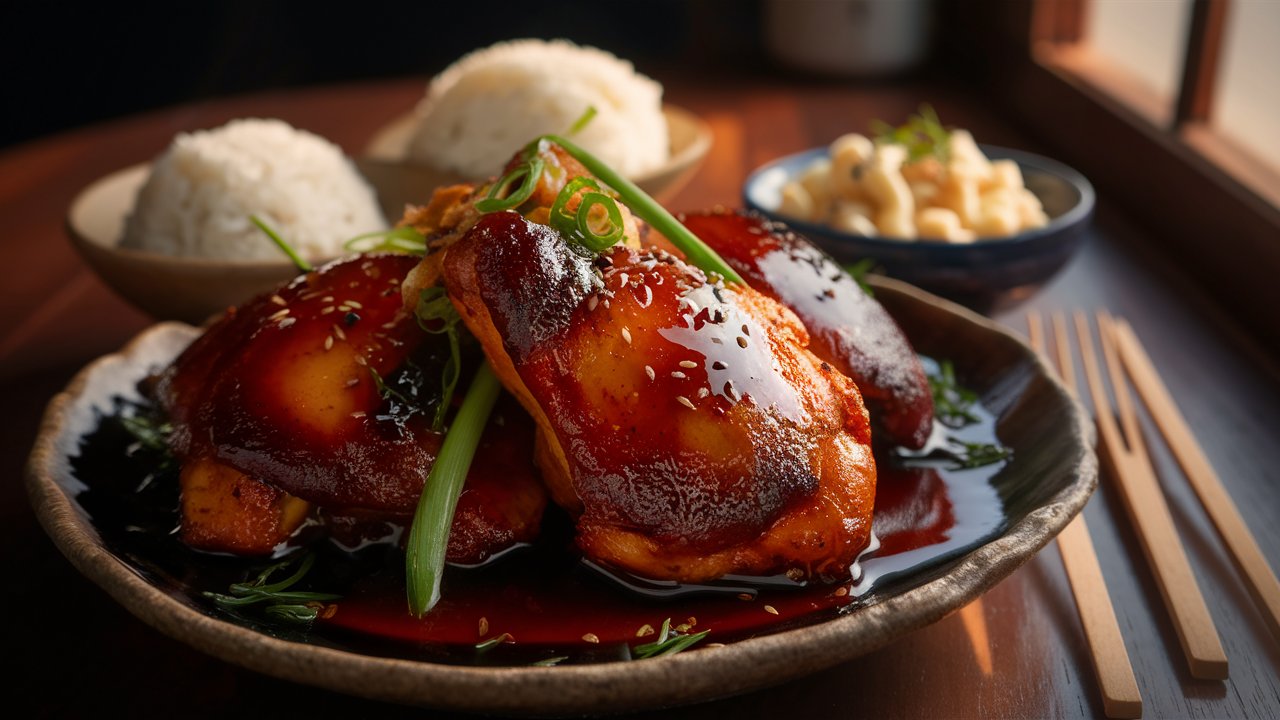
The shoyu chicken recipe is a staple of Hawaiian plate lunch culture — served over a generous mound of white rice with macaroni salad on the side, it’s the dish that locals grow up eating and mainlanders fall completely in love with on their first visit to the islands. It’s comfort food in its purest form — simple ingredients, bold flavors, and a braising liquid that reduces into a glossy, lacquer-like glaze that coats every piece of chicken with layer after layer of sweet, savory, umami-rich flavor.
This shoyu chicken recipe gives you everything — the authentic Hawaiian technique, the perfect sauce ratio, and all the tips you need to make it flawlessly every single time.
The word “shoyu” is the Japanese term for soy sauce — and in Hawaii, it’s the word that locals use almost exclusively rather than the English “soy sauce.” This reflects the deep Japanese cultural influence on Hawaiian cuisine that developed from the large Japanese immigrant population that came to Hawaii to work on sugar plantations in the late 19th and early 20th centuries.
This shoyu chicken recipe is essentially a Hawaiian interpretation of Japanese soy-braised chicken — a cooking technique brought to the islands by Japanese immigrants and transformed over generations into a distinctly Hawaiian dish. It borrows elements from Japanese shoyu-based dishes but incorporates the sweet, rich flavors and relaxed, generous spirit of Hawaiian plate lunch culture.
What makes this shoyu chicken recipe distinctly Hawaiian rather than simply Japanese is the generous amount of sugar in the braising liquid — Hawaiian versions are notably sweeter than their Japanese counterparts — and the addition of aromatics like fresh ginger and garlic in quantities that produce a bold, layered flavor profile.
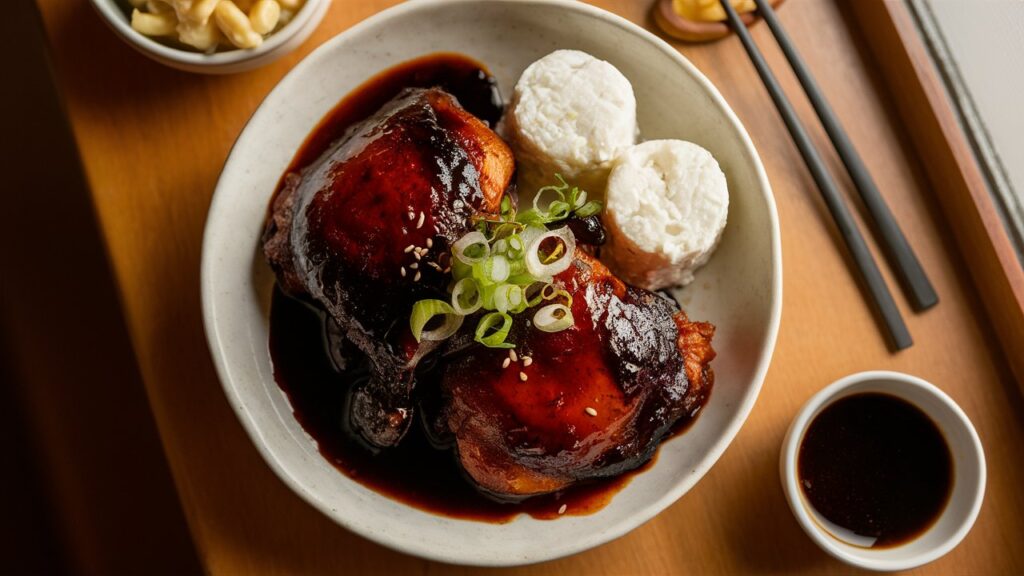
Chicken thighs, not breasts. This shoyu chicken recipe uses bone-in, skin-on chicken thighs for very specific reasons. The bone adds flavor to the braising liquid. The skin protects the meat during the long braise and can be crisped under the broiler at the end for textural contrast. And thigh meat itself — with its higher fat content and more robust muscle structure — stays incredibly juicy and tender through extended braising, while chicken breast would dry out and toughen.
The sweet-savory balance. The defining characteristic of a great shoyu chicken recipe is the balance between the salty depth of the soy sauce and the sweetness of the brown sugar. This recipe uses the precise ratio of shoyu to sugar that produces a sauce that’s deeply savory with just enough sweetness to round out the edges — never cloying, never one-dimensional.
Fresh ginger and garlic. Many shortcuts for this shoyu chicken recipe use garlic powder and ground ginger. This recipe insists on fresh — sliced fresh ginger and smashed garlic cloves release their flavor into the braising liquid over the long cook, producing a depth and complexity that dried spices simply cannot replicate.
The reduction is everything. The magic of this shoyu chicken recipe happens in the final stage when the braising liquid is reduced into a thick, glossy glaze. This concentration of flavor — the soy, sugar, ginger, and garlic cooked down into an intensely savory lacquer — is what makes this dish absolutely extraordinary.
Marinating overnight. While this shoyu chicken recipe can be made without marinating, allowing the chicken to sit in the sauce overnight before cooking produces a noticeably more deeply flavored result — the soy sauce and sugar penetrate the meat and season it from the inside out.
No discussion of the shoyu chicken recipe is complete without understanding its place in Hawaiian plate lunch culture. The plate lunch is Hawaii’s most iconic food tradition — a generous meal served on a styrofoam plate with two scoops of white rice, one scoop of macaroni salad, and a protein of choice.
Shoyu chicken is one of the most beloved plate lunch proteins in Hawaii — found at roadside lunch wagons, local diners, and family kitchen tables across the islands. For many people who grew up in Hawaii, this shoyu chicken recipe is one of the most powerfully nostalgic foods imaginable — the smell of shoyu chicken braising is the smell of home.
Recreating this shoyu chicken recipe at home is not just making dinner — it’s connecting with one of the most warm, generous, and deeply satisfying food cultures in the world.
The sauce is the heart and soul of this shoyu chicken recipe — understanding each component helps you customize it with confidence:
Shoyu (soy sauce): The backbone of this shoyu chicken recipe. Use regular soy sauce for the classic version. Low-sodium soy sauce can be used if you’re sensitive to salt, but the flavor will be slightly less intense. Japanese soy sauce (like Kikkoman) is the most traditional choice for this shoyu chicken recipe and produces the best result.
Brown sugar: Adds sweetness, caramel depth, and helps the sauce reduce into a beautiful glaze in this shoyu chicken recipe. Dark brown sugar produces a more intense molasses flavor — light brown sugar produces a milder result. Both work well.
Mirin: A sweet Japanese rice wine that adds a subtle complexity and helps create the glossy, lacquer-like finish of the sauce in this shoyu chicken recipe. Substitute with dry sherry and a small amount of sugar if unavailable.
Sake: Japanese rice wine that adds umami depth and helps tenderize the chicken in this shoyu chicken recipe. Substitute with dry white wine or chicken broth if sake is unavailable.
Fresh ginger: Adds warmth, a subtle heat, and a bright aromatic quality that’s essential to the authentic flavor of this shoyu chicken recipe. Use freshly sliced ginger — about 5mm thick slices — rather than grated for a more subtle, less aggressive ginger flavor.
Garlic: Adds savory depth and aroma to this shoyu chicken recipe. Smash the cloves with the flat of a knife rather than mincing — this releases flavor gently without making the sauce overpoweringly garlicky.
Sesame oil: Added at the end of this shoyu chicken recipe for a nutty, aromatic finish that’s distinctly Asian in character. Use toasted sesame oil for the most intense flavor.
The authentic way to serve this shoyu chicken recipe is the plate lunch style:
Two scoops of white rice: Use a rice cooker and Japanese short-grain rice (like Koshihikari) for the most authentic result. The sticky, slightly sweet quality of Japanese short-grain rice is the perfect vehicle for the rich shoyu sauce from this shoyu chicken recipe.
Hawaiian macaroni salad: The classic plate lunch side dish — elbow macaroni in a creamy, slightly sweet mayonnaise dressing with grated carrots and onion. The mild, creamy macaroni salad perfectly balances the bold, savory flavors of this shoyu chicken recipe.
Furikake: A sprinkle of furikake (Japanese rice seasoning) over the rice adds extra umami and visual appeal alongside this shoyu chicken recipe.
Extra sauce: Always serve extra reduced braising sauce from this shoyu chicken recipe in a small bowl on the side — people will want to pour it over everything.
Sliced green onions and sesame seeds: The classic garnish for this shoyu chicken recipe — they add freshness, color, and textural contrast to the rich, glossy chicken.
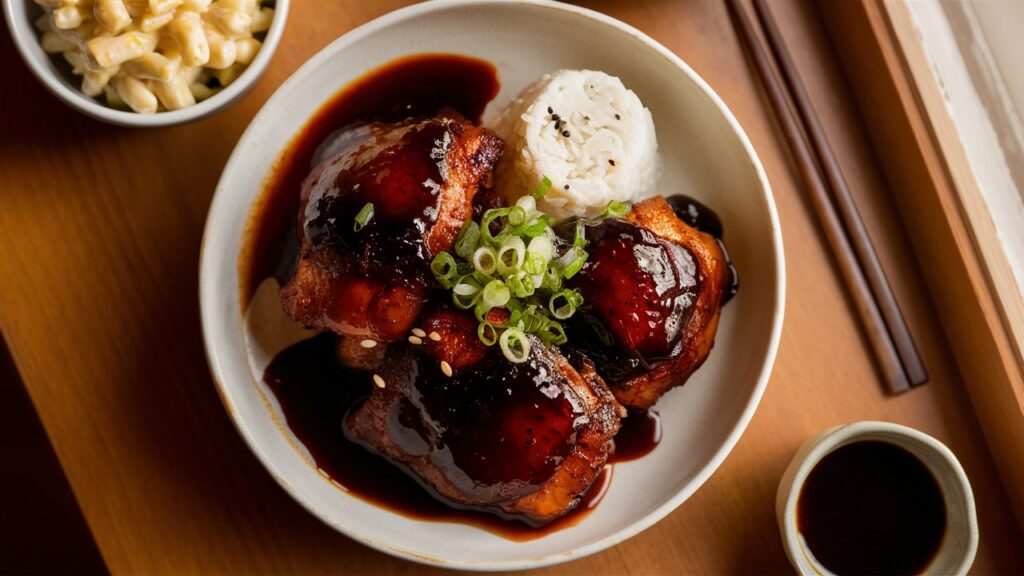
Don’t skip the marinating step. Even 30 minutes of marinating dramatically improves the depth of flavor in this shoyu chicken recipe. Overnight marinating produces the absolute best result — plan ahead when possible.
Use bone-in, skin-on thighs. The bone and skin are not optional components of this shoyu chicken recipe — they’re essential for maximum flavor and the most tender, juicy meat. Boneless skinless thighs can be used for a quicker version but the result won’t be as rich or flavorful.
Don’t rush the braise. This shoyu chicken recipe needs time for the chicken to become truly tender and for the sauce to develop its full depth of flavor. Low, gentle heat for the full cooking time produces a noticeably better result than higher heat for a shorter time.
Reduce the sauce properly. The reduction step at the end of this shoyu chicken recipe is where the magic happens. Don’t rush it — let the sauce reduce until it’s thick enough to coat the back of a spoon and has a glossy, lacquer-like appearance.
Broil for crispy skin. After braising, place the chicken skin-side up under the broiler for 3–4 minutes. This crisps the skin and caramelizes the sauce coating in this shoyu chicken recipe, adding a textural element that takes the dish to another level.
Skim the fat. After braising, the cooking liquid in this shoyu chicken recipe will have a layer of rendered fat on top. Skim this off before reducing the sauce for a cleaner, more refined result.
Spicy shoyu chicken: Add 1–2 tablespoons of gochujang or sambal oelek to this shoyu chicken recipe for a spicy kick that works beautifully alongside the sweet-savory sauce.
Honey shoyu chicken: Substitute half the brown sugar with honey in this shoyu chicken recipe for a floral, more complex sweetness that produces a particularly beautiful glaze.
Shoyu chicken with pineapple: Add fresh pineapple chunks to the braising liquid in this shoyu chicken recipe for a tropical sweetness and acidity that’s quintessentially Hawaiian.
Slow cooker shoyu chicken: Transfer all ingredients to a slow cooker and cook on LOW for 6–8 hours or HIGH for 3–4 hours. This shoyu chicken recipe translates beautifully to the slow cooker — simply reduce the braising liquid in a saucepan after cooking.
Instant Pot shoyu chicken: Pressure cook on HIGH for 15 minutes with a natural release for 10 minutes. This shoyu chicken recipe in the Instant Pot produces incredibly tender chicken in a fraction of the time.
Shoyu chicken wings: Use chicken wings instead of thighs for this shoyu chicken recipe — they become incredibly sticky, glossy, and addictive. Perfect for parties and game day spreads.
Make ahead: This shoyu chicken recipe is one of the best make-ahead dinner preparations you can make. The flavor improves significantly overnight as the chicken absorbs more of the sauce. Make it up to 2 days ahead and reheat gently before serving.
Refrigerator storage: Store this shoyu chicken recipe in an airtight container in the refrigerator for up to 4 days. Store the chicken and sauce together — the chicken continues to absorb flavor as it sits.
Reheating: Reheat this shoyu chicken recipe gently in a covered saucepan over low heat with a splash of water to prevent the sauce from scorching. Alternatively, microwave covered in 30-second intervals until heated through.
Freezing: This shoyu chicken recipe freezes beautifully for up to 3 months. Freeze the chicken and sauce together in an airtight container. Thaw overnight in the refrigerator before reheating.
What does shoyu mean in this shoyu chicken recipe? Shoyu is the Japanese and Hawaiian word for soy sauce. In Hawaii, shoyu is the standard term used in everyday cooking — this shoyu chicken recipe uses it to honor the Hawaiian culinary tradition from which the dish originates.
Can I use chicken breasts in this shoyu chicken recipe? Chicken breasts can be used but are not recommended. They dry out quickly during the long braise and produce a less flavorful result than thighs. If using breasts, reduce the braising time significantly and monitor carefully.
What soy sauce should I use in this shoyu chicken recipe? Regular Japanese soy sauce like Kikkoman is the most traditional and recommended choice for this shoyu chicken recipe. Avoid dark soy sauce, which is too intense, or light soy sauce, which lacks sufficient depth.
Can I make this shoyu chicken recipe without sake or mirin? Yes — substitute sake with dry white wine or chicken broth, and substitute mirin with dry sherry plus a teaspoon of sugar. The flavor will be slightly different but this shoyu chicken recipe will still be delicious.
Why is my shoyu chicken recipe sauce too salty? The sauce is meant to be quite intense — it’s a braising liquid that will be diluted when eaten with rice. If it still seems too salty, add more brown sugar and a splash of water to balance the flavors in this shoyu chicken recipe.
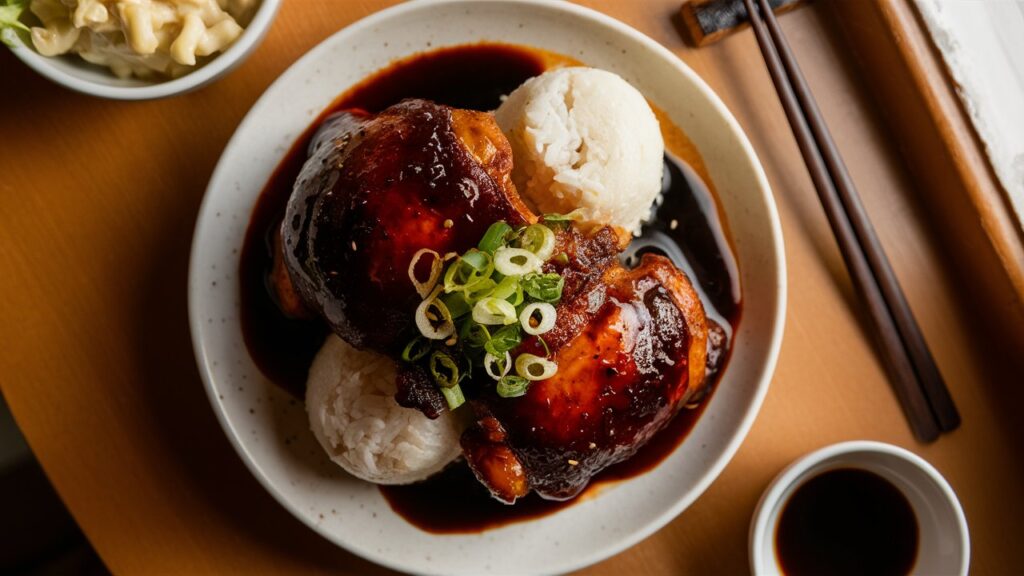
This shoyu chicken recipe is everything great comfort food should be — deeply satisfying, full of bold flavor, simple to make, and generous in every way. The rich soy-ginger-garlic glaze, the impossibly tender chicken, the glossy lacquered surface — everything about this shoyu chicken recipe speaks to the warmth and generosity of Hawaiian plate lunch culture.
Make this shoyu chicken recipe on a Sunday afternoon and let the incredible aroma fill your home. Serve it over rice with macaroni salad and extra sauce on the side. Share it with people you love. And experience for yourself why this shoyu chicken recipe has been feeding and comforting people across the Hawaiian islands — and beyond — for generations.