If you’ve been searching for the perfect di cookie recipe that delivers genuinely soft, melt-in-your-mouth texture, rich buttery flavor, and…
If you’ve been searching for the perfect di cookie recipe that delivers genuinely soft, melt-in-your-mouth texture, rich buttery flavor, and that unmistakable Italian bakery quality in every single bite — your search ends right here. These di cookie treats are everything a great Italian cookie should be — beautifully simple, deeply flavorful, and so incredibly delicious that they disappear from the plate long before they’ve had a chance to cool completely.
The di cookie is one of those timeless Italian baking traditions that has stood the test of generations for very good reason. Made with simple, high-quality ingredients and a technique that prioritizes texture above everything else, the di cookie represents the very best of Italian pastry philosophy — that the finest results come not from complexity, but from doing simple things extraordinarily well.
Whether you’re making these di cookie treats for the holidays, a cookie exchange, an afternoon tea, or simply because you deserve something truly special on any given day — this recipe delivers flawlessly every single time.
The di cookie is a classic Italian-style butter cookie with roots in the rich pastry tradition of Italy. Characterized by its tender, melt-in-your-mouth crumb, delicate sweetness, and beautiful simplicity, the di cookie has been a staple of Italian home kitchens and bakeries for generations.
What distinguishes a true di cookie from other butter cookies is the precise balance of fat, flour, and sugar that produces a texture that’s simultaneously firm enough to hold its shape and tender enough to dissolve on the tongue with almost no resistance. A properly made di cookie should never be hard, never be cakey, and never be greasy — it should be perfectly, precisely balanced.
The di cookie tradition reflects the Italian baking philosophy of using the finest available ingredients in their purest form — real butter, quality flour, fresh eggs, and genuine vanilla — allowing each ingredient to contribute its best qualities to the final result without being masked by excessive sweetness or unnecessary additions.
European-style butter. This di cookie recipe uses high-fat European-style butter with a minimum of 82% butterfat. The extra fat content produces a noticeably richer, more tender crumb and a more complex dairy flavor than standard American butter. This single ingredient choice makes a significant difference in the final quality of your di cookie.
Powdered sugar instead of granulated. Using powdered sugar in this di cookie recipe rather than granulated sugar produces a finer, more delicate crumb. Powdered sugar contains a small amount of cornstarch that further tenderizes the texture of the di cookie, contributing to that signature melt-in-your-mouth quality.
The right flour ratio. Too much flour produces a dense, dry di cookie. Too little produces a greasy, shapeless result. This recipe uses the precise flour ratio that gives every di cookie the perfect structure — firm enough to hold a beautiful shape, tender enough to melt on the tongue.
Chilling the dough. Chilling the di cookie dough before baking is essential. Cold dough holds its shape during baking, produces cleaner edges, and develops more complex flavor. Never skip this step when making di cookie at home.
Real vanilla bean paste. This di cookie recipe uses vanilla bean paste rather than extract for a more intense, complex vanilla flavor with beautiful black specks visible in every di cookie — a hallmark of premium quality that signals real vanilla to anyone who knows their baked goods.
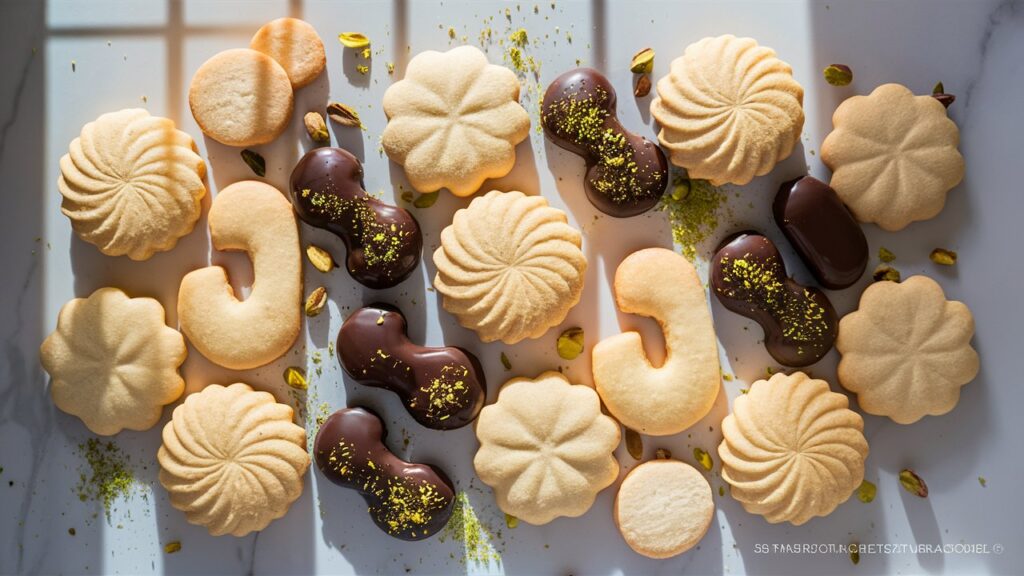
Understanding the history behind the di cookie helps you appreciate the philosophy behind the technique. Italian butter cookies — of which the di cookie is a prime example — have been part of Italian pastry culture for centuries, appearing in the glass cases of pasticcerie (Italian pastry shops) from Sicily to Milan.
The Italian approach to the di cookie is fundamentally different from American cookie baking. Where American cookie culture tends to celebrate excess — more chocolate chips, more sugar, bigger cookies — the Italian tradition that produced the di cookie celebrates restraint and precision. The goal is not to overwhelm the palate but to satisfy it completely with carefully calibrated flavors and textures.
This philosophy is what makes the di cookie so enduringly beloved. It never feels excessive. It never feels heavy. A di cookie is always exactly the right amount of everything — sweet but not cloying, rich but not heavy, simple but never boring.
The quality of ingredients in this di cookie recipe matters more than in almost any other cookie. With so few components and such a simple technique, there is nowhere for inferior ingredients to hide:
Butter: Use the highest quality European-style unsalted butter you can find for this di cookie recipe. Brands like Plugrá, Kerrygold, or Président all produce excellent results. The butter should be at room temperature — soft enough to leave a fingerprint but not melted or oily.
Flour: Standard all-purpose flour works well for this di cookie recipe. For an even more tender result, substitute up to 25% of the all-purpose flour with cake flour — the lower protein content produces a more delicate crumb in every di cookie.
Eggs: Use large eggs at room temperature for this di cookie recipe. Room temperature eggs incorporate more smoothly into the butter and sugar, producing a more uniform, tender di cookie dough.
Vanilla: Use pure vanilla bean paste or high-quality pure vanilla extract. The vanilla is one of the primary flavor notes in this di cookie — quality matters enormously here.
Salt: A small but essential addition to this di cookie recipe. Salt enhances every other flavor and prevents the di cookie from tasting flat and one-dimensional.
One of the most beautiful aspects of the di cookie is how perfectly it accepts decoration. The simple, elegant base of this di cookie recipe is a canvas for endless creative possibilities:
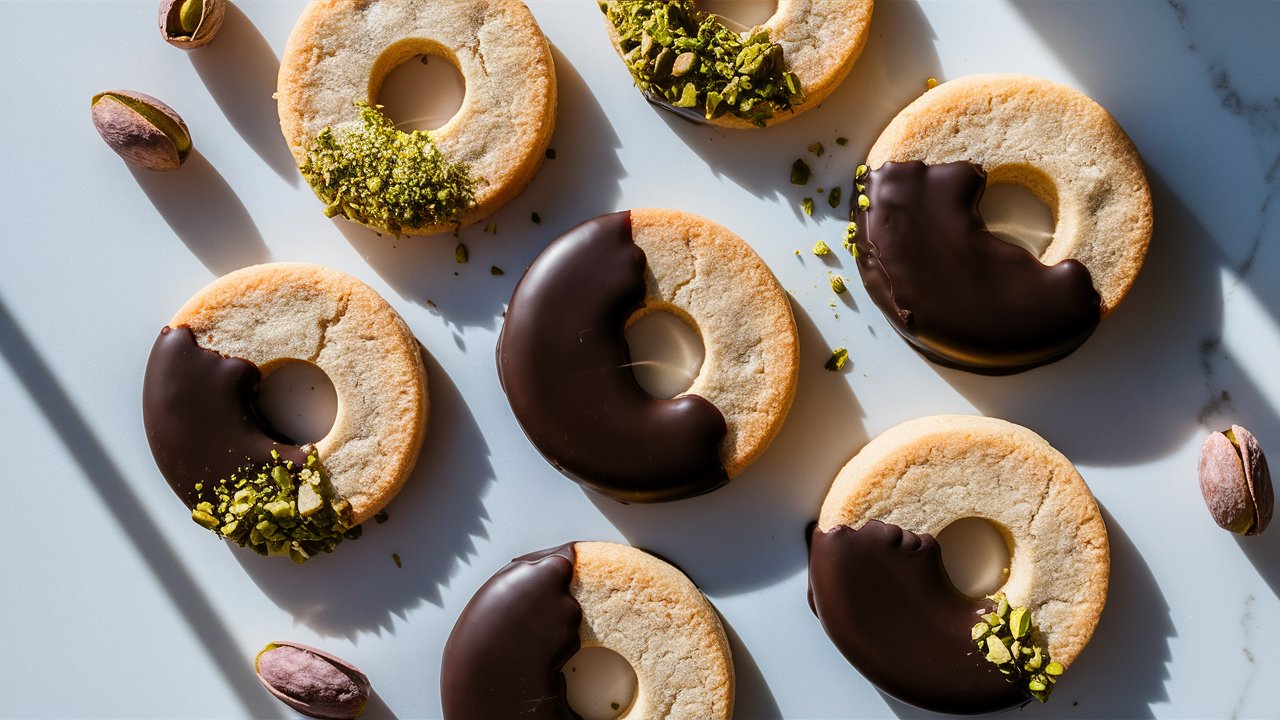
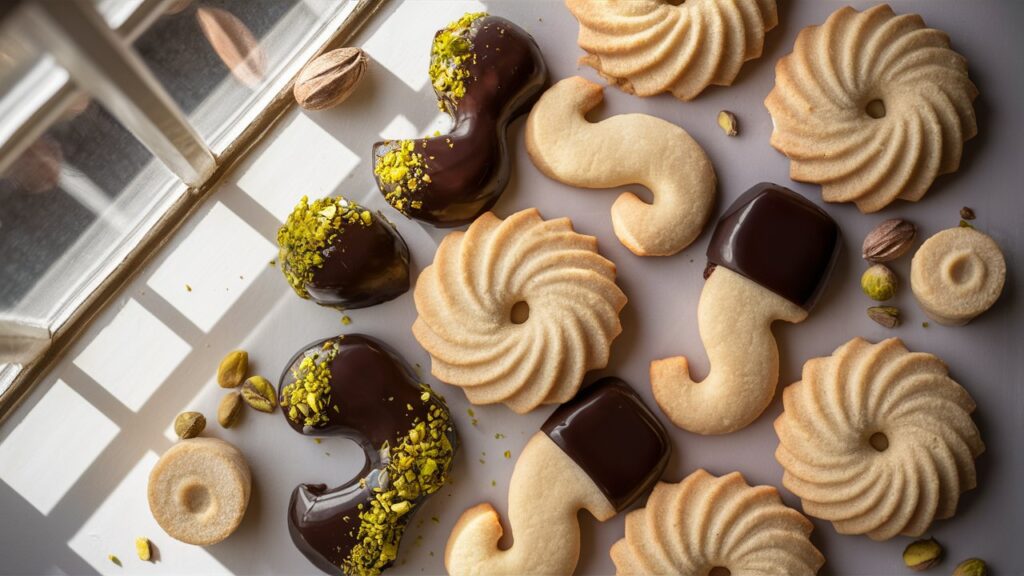
Classic chocolate dip: Dip half of each di cookie in tempered dark, milk, or white chocolate for an elegant finish that’s both visually stunning and delicious.
Royal icing: Pipe simple designs onto each di cookie with royal icing for a beautifully decorated version perfect for the holiday season.
Colored sugar: Press colored sugar crystals onto the tops of di cookie dough before baking for a simple, festive decoration that catches the light beautifully.
Jam thumbprint: Press a small indent into the center of each di cookie dough ball before baking and fill with a small amount of raspberry or apricot jam for a classic Italian variation.
Chocolate drizzle: After baking, drizzle each di cookie with melted chocolate in a thin zigzag pattern for an elegant, professional-looking finish.
Crushed pistachios: Roll the edges of each chocolate-dipped di cookie in finely crushed pistachios for a beautiful green accent and nutty flavor that’s quintessentially Italian.
Lemon glaze: Brush a simple lemon glaze over each di cookie while still warm for a bright, citrusy finish that makes the cookies shine beautifully.
Use a stand mixer or hand mixer. Properly creaming the butter and sugar is the foundation of a great di cookie. You need the butter and sugar beaten together for at least 3–4 minutes until genuinely light, pale, and fluffy — this cannot be done effectively by hand.
Don’t overmix after adding flour. Once the flour is added to the di cookie dough, mix only until just combined. Overmixing develops gluten and produces a tough, less tender di cookie rather than the melt-in-your-mouth result you’re after.
Chill the dough thoroughly. This di cookie dough must be chilled for at least 1 hour before shaping and baking. Cold dough produces cleaner shapes, more defined edges, and better texture in the finished di cookie.
Use a cookie press or piping bag. Traditional di cookie are often shaped using a cookie press or piped through a large star tip for that classic ridged appearance. Both techniques produce beautiful results.
Bake at a lower temperature. This di cookie recipe uses a lower oven temperature than most cookie recipes — 160°C rather than 175°C. The lower temperature produces a pale, barely golden di cookie with an incredibly tender crumb rather than a crisply browned exterior.
Don’t overbake. The di cookie should come out of the oven looking almost underdone — pale, set at the edges, and still slightly soft in the center. It firms up to the perfect texture as it cools on the pan.
Cool completely before decorating. Always cool your di cookie completely before dipping in chocolate or applying any glaze. Decorating a warm di cookie causes chocolate to melt and glazes to run.
Chocolate di cookie: Add 30g of high-quality Dutch-process cocoa powder to the flour in this di cookie recipe for a rich chocolate version that’s extraordinary dipped in white chocolate.
Lemon di cookie: Add the zest of two lemons and 1 teaspoon of lemon extract to this di cookie recipe for a bright, citrusy version that’s particularly beautiful in spring and summer.
Almond di cookie: Add 1 teaspoon of pure almond extract and fold in 50g of finely ground blanched almonds for a classic Italian-flavored di cookie that pairs beautifully with espresso.
Orange di cookie: Add the zest of one large orange and a teaspoon of orange blossom water to this di cookie recipe for a floral, aromatic variation that’s sophisticated and utterly delicious.
Pistachio di cookie: Fold 80g of finely ground roasted pistachios into this di cookie dough for a beautiful green-flecked cookie with a rich, nutty flavor.
Espresso di cookie: Add 1 tablespoon of finely ground espresso powder to this di cookie recipe for a coffee-flavored version that’s absolutely extraordinary alongside an afternoon cappuccino.
Gluten-free di cookie: Substitute the all-purpose flour with a 1:1 gluten-free flour blend. Add an extra tablespoon of cornstarch for the best texture in a gluten-free di cookie.
The di cookie is one of the most versatile cookies when it comes to serving and pairing:
With coffee and espresso: The classic Italian pairing. A di cookie alongside a perfectly pulled espresso or a frothy cappuccino is one of life’s genuine small pleasures.
With tea: A di cookie pairs beautifully with Earl Grey, chamomile, or any delicate herbal tea. The buttery simplicity of the di cookie complements rather than competes with the tea.
On a cookie platter: The elegant simplicity of the di cookie makes it an ideal component of a mixed cookie platter — its refined appearance elevates everything around it.
As a gift: A tin of beautifully decorated di cookie makes an exceptional edible gift for any occasion. The cookies travel well, keep beautifully, and look professionally made with minimal decoration.
With wine: A lightly sweet dessert wine like Moscato d’Asti or Vin Santo pairs magnificently with a di cookie — the Italian tradition of dipping cookies in sweet wine is one of the most civilized dessert customs imaginable.
With gelato: Serve a di cookie alongside a scoop of high-quality vanilla or pistachio gelato for a simple, elegant dessert that feels genuinely special.
Dough storage: The unbaked di cookie dough keeps in the refrigerator for up to 3 days. For longer storage, shape the dough and freeze on a baking sheet until solid, then transfer to a freezer bag. Frozen di cookie dough keeps for up to 3 months — bake directly from frozen, adding 2–3 minutes to the baking time.
Baked cookie storage: Store baked di cookie in an airtight container at room temperature for up to 7 days. The di cookie actually improves slightly after the first day as the texture settles and the flavor deepens.
Freezing baked cookies: Baked di cookie freeze beautifully for up to 3 months. Layer in an airtight container with parchment paper between layers. Thaw at room temperature for 30 minutes before serving.
Decorated di cookie: Store chocolate-dipped or glazed di cookie in a single layer in an airtight container at room temperature for up to 5 days. Avoid stacking decorated di cookie as the chocolate or glaze can mark.
What makes a di cookie different from other butter cookies? The di cookie is distinguished by its precise balance of ingredients and technique — specifically the use of powdered sugar rather than granulated, high-fat European butter, and a lower baking temperature — that produces a uniquely tender, melt-in-your-mouth texture that other butter cookies rarely achieve.
Why did my di cookie spread too flat? The most common causes are butter that was too soft or warm when creamed, dough that wasn’t chilled before baking, or too little flour. Always chill your di cookie dough for at least 1 hour and ensure your butter is soft but not melted.
Can I make di cookie without a cookie press? Absolutely. This di cookie dough can be rolled into balls and pressed flat with a fork, rolled and cut with cookie cutters, or piped through a large star tip for beautiful ridged cookies. All methods produce excellent di cookie results.
Why are my di cookie too hard? Overbaking is almost always the cause of hard di cookie. Remove them from the oven when they look barely set and still slightly underdone — they firm up perfectly as they cool. Also check that you haven’t used too much flour.
Can I freeze di cookie dough? Yes — this di cookie dough freezes beautifully for up to 3 months. Shape into a log for slice-and-bake di cookie, or pre-scoop into individual portions before freezing for ready-to-bake convenience.
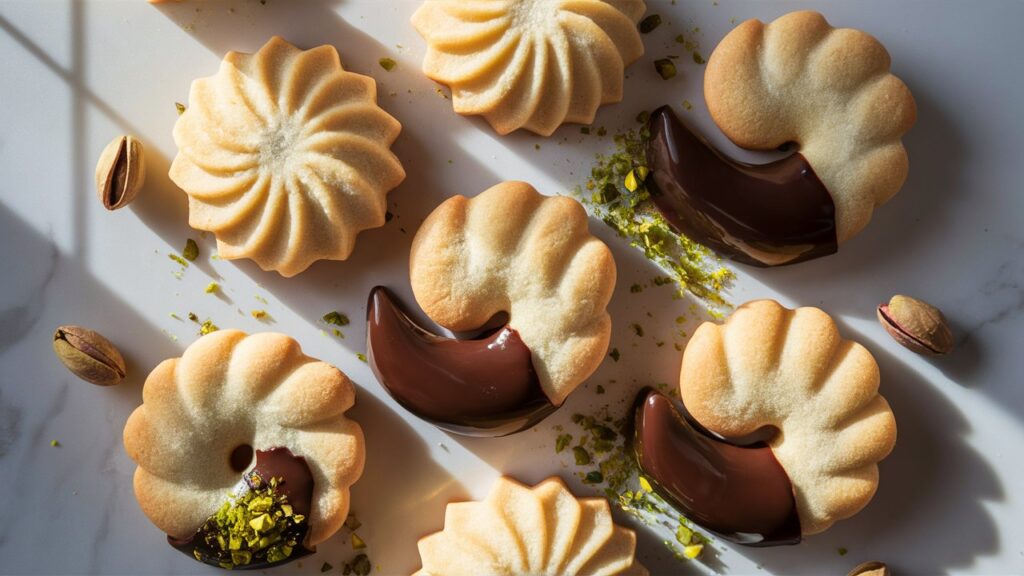
These di cookie are proof that Italian baking philosophy — simplicity elevated to perfection — produces some of the most satisfying and enduring treats in all of baking. Rich European butter, delicate powdered sugar, real vanilla, and precise technique combine to create a di cookie that’s simultaneously humble and extraordinary — the kind of cookie that requires no explanation, no elaborate decoration, and no special occasion to justify making.
Bake a batch of these di cookie this weekend. Share them with people you love. Serve them with espresso or tea. Wrap them in a beautiful tin and give them as a gift. Or simply sit quietly with a di cookie and a cup of something warm and appreciate the rare, genuine pleasure of a perfectly made cookie.
This di cookie recipe is that good. And now it’s completely yours.