If you’ve never made a mango sago recipe before, you’re about to discover one of the most beloved desserts in…
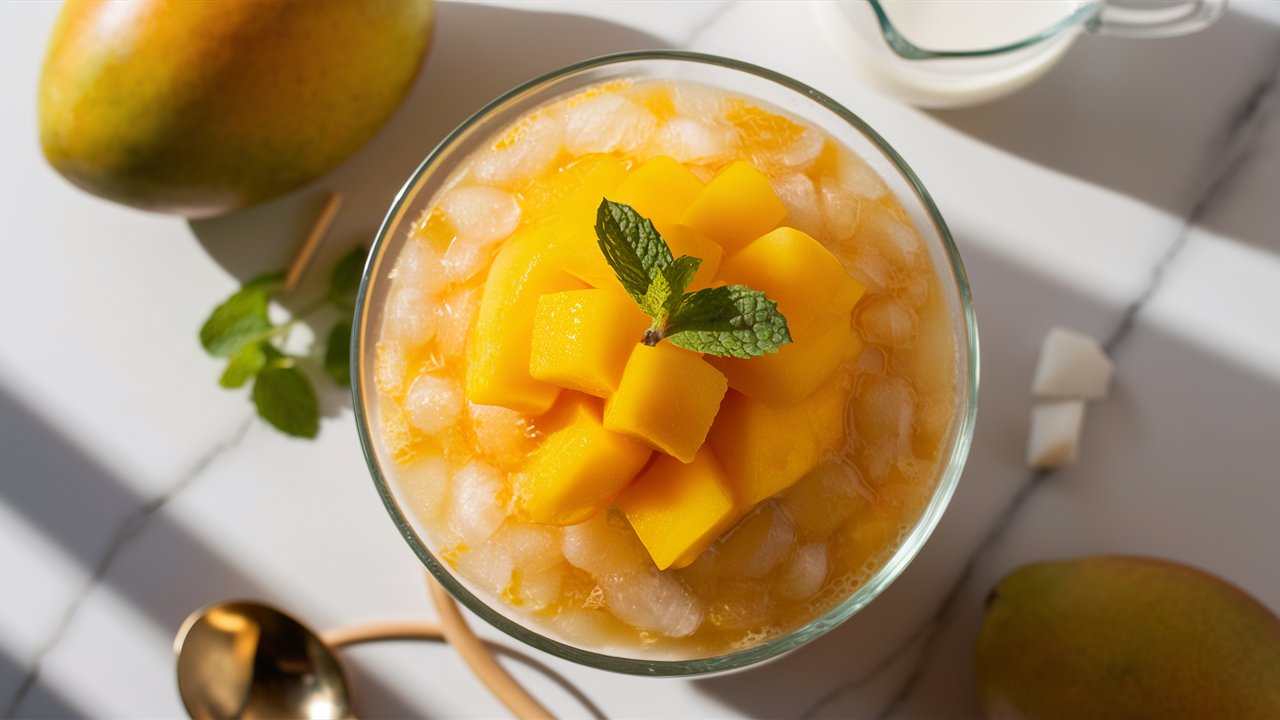
If you’ve never made a mango sago recipe before, you’re about to discover one of the most beloved desserts in Asian cuisine. Creamy, refreshing, bursting with tropical mango flavor, and studded with soft translucent sago pearls — this is a dessert that manages to feel simultaneously indulgent and light, making it perfect for any season and any occasion.
The mango sago recipe originated in Hong Kong and has since spread across Southeast Asia, becoming a staple in dessert shops from Manila to Singapore, Bangkok to Taipei. Its combination of fresh mango, coconut milk, and chewy sago pearls creates a flavor and texture profile that’s unlike anything in Western dessert tradition — and once you try it, you’ll understand completely why it has captivated dessert lovers across the world.
This mango sago recipe gives you everything you need — the authentic technique, the perfect mango-to-coconut ratio, and all the tips to make it flawlessly every single time.
The mango sago recipe is a chilled Asian dessert soup made with three core components: fresh mango puree, coconut milk or cream, and cooked sago pearls. Some versions also incorporate pomelo segments, evaporated milk, or condensed milk for added richness and sweetness.
Sago pearls are small, translucent spheres made from the starch of the sago palm. When cooked, they become soft, chewy, and almost jelly-like — similar in texture to tapioca pearls but slightly smaller and more delicate. Their neutral flavor allows them to absorb the surrounding mango-coconut liquid beautifully, making every spoonful a perfect balance of creamy, fruity, and chewy.
The most famous version of this mango sago recipe is Yang Zhi Gan Lu — a Hong Kong dessert shop classic whose name translates roughly to “mango pomelo sago.” This version includes fresh pomelo segments that add a burst of citrusy tartness between the sweet mango and creamy coconut — a combination that many people consider the definitive mango sago recipe.
Fresh mango is non-negotiable. The quality of the mango makes or breaks this mango sago recipe. Fresh, ripe Alphonso or Ataulfo mangoes have an intensity of flavor, natural sweetness, and silky texture that frozen or canned mango simply cannot replicate. When in season, always use fresh mango.
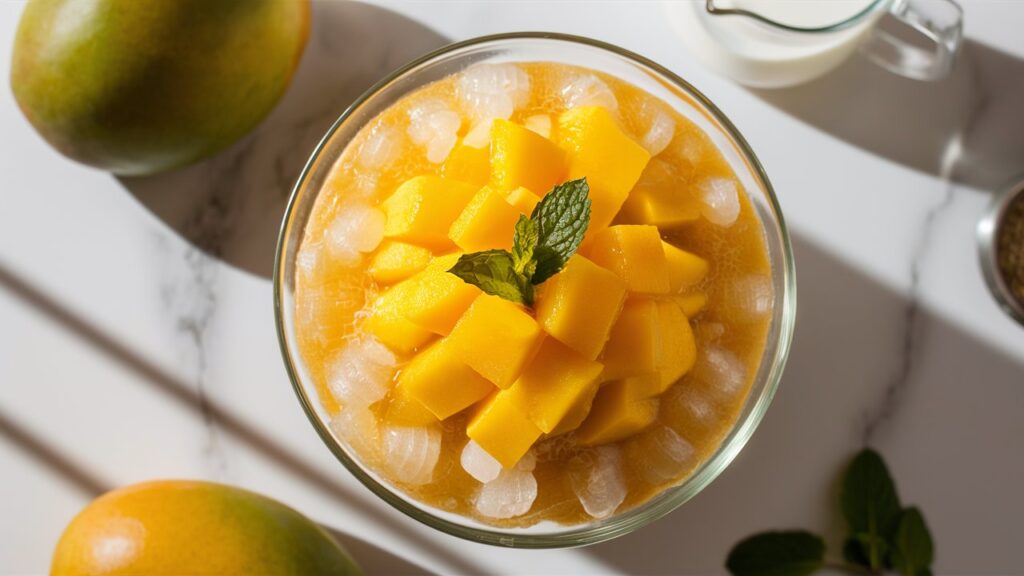
The two-texture approach. The best mango sago recipe uses mango in two ways — blended into a smooth puree for the base and cut into small cubes for texture and visual appeal. This creates a dessert that’s both uniformly flavorful and texturally interesting.
Coconut milk plus evaporated milk. Using both coconut milk and evaporated milk in this mango sago recipe creates a richer, more complex creaminess than either alone. The coconut milk adds tropical flavor while the evaporated milk adds a caramelized dairy richness.
Chilling is essential. This mango sago recipe must be served cold. Chilling the dessert for at least 2 hours before serving allows the flavors to meld, the sago to fully absorb the surrounding liquid, and the texture to reach the perfect thick, creamy consistency.
Proper sago cooking technique. Overcooked sago turns mushy and dissolves into the liquid. Undercooked sago is hard and unpleasant. The perfect sago for this mango sago recipe is cooked until the pearls are almost — but not completely — translucent, then finished off the heat.
No discussion of the mango sago recipe is complete without understanding its roots. The dish is deeply connected to Hong Kong’s tong sui tradition — a category of sweet soup desserts that are an essential part of Cantonese food culture.
Tong sui encompasses dozens of desserts ranging from red bean soup to black sesame paste, but mango sago — particularly the Yang Zhi Gan Lu version — has become one of the most internationally recognized and beloved. It was popularized by Hong Kong dessert chains like Hui Lau Shan, which turned this mango sago recipe into a global phenomenon by opening locations across Asia and beyond.
Today this mango sago recipe is found in dessert shops, dim sum restaurants, and home kitchens across the world — a testament to how perfectly balanced and universally appealing its flavors are.
The mango is the star of this mango sago recipe — choosing the right variety makes an enormous difference:
Alphonso mango (best choice): Often called the king of mangoes, Alphonso mangoes from India have an intensely sweet, aromatic flavor and a smooth, fiber-free flesh that blends into a silky puree. If you can find them, use them.
Ataulfo/Honey mango (excellent choice): These small yellow mangoes are widely available in the United States and have a rich, sweet, slightly citrusy flavor with minimal fiber. They produce a beautiful golden puree for this mango sago recipe.
Kent or Keitt mango (good choice): These large mangoes have a sweet, mild flavor and smooth flesh. They work well in this mango sago recipe and are widely available year-round.
Tommy Atkins mango (avoid if possible): The most commonly sold mango in many Western supermarkets, Tommy Atkins mangoes have a mild flavor and stringy flesh that produces a less flavorful, less smooth puree.
How to tell if a mango is ripe: A ripe mango yields slightly to gentle pressure, smells fruity and sweet at the stem end, and has skin that’s beginning to wrinkle slightly at the tip. Don’t judge ripeness by color alone — many varieties remain green even when fully ripe.
Sago pearls are a key component of this mango sago recipe and worth understanding before you cook:
What are they? Sago pearls are made from the starch extracted from the sago palm trunk. They’re processed into small spherical pearls that look similar to tapioca pearls.
Sago vs. tapioca: While sago and tapioca pearls look and behave similarly, they come from different sources — sago from the sago palm, tapioca from cassava root. Sago pearls are generally smaller and slightly more delicate than tapioca. For this mango sago recipe, either can be used, though sago is more traditional.
Where to buy them: Sago pearls are available at Asian grocery stores, international food markets, and online. They’re typically sold dried and require cooking before use.
Small vs. large pearls: This mango sago recipe uses small sago pearls (about 2–3mm diameter), which cook faster and have a more delicate texture. Large tapioca-style pearls can also be used for a chewier, more substantial texture.
Once you’ve mastered the classic mango sago recipe, here are some beautiful variations to explore:
Yang Zhi Gan Lu (Mango Pomelo Sago): The Hong Kong original. Add fresh pomelo segments (or grapefruit as a substitute) to this mango sago recipe for a citrusy, slightly bitter contrast that makes the whole dessert sing. This is arguably the definitive version.
Mango sago with lychee: Add canned or fresh lychee segments to the finished dessert for an extra floral, sweet tropical dimension.
Mango coconut sago pudding: Use more coconut cream and less milk for a thicker, more pudding-like consistency that’s spectacular served in individual glasses.
Mango sago with grass jelly: Popular in Southeast Asian versions of this mango sago recipe, grass jelly cubes add a pleasantly bitter, herbal contrast to the sweet mango.
Strawberry sago: Substitute the mango with fresh strawberry puree for a completely different but equally beautiful version of this dessert.
Mango sago ice cream float: Add a scoop of coconut or vanilla ice cream to the finished mango sago recipe for an extra indulgent version.
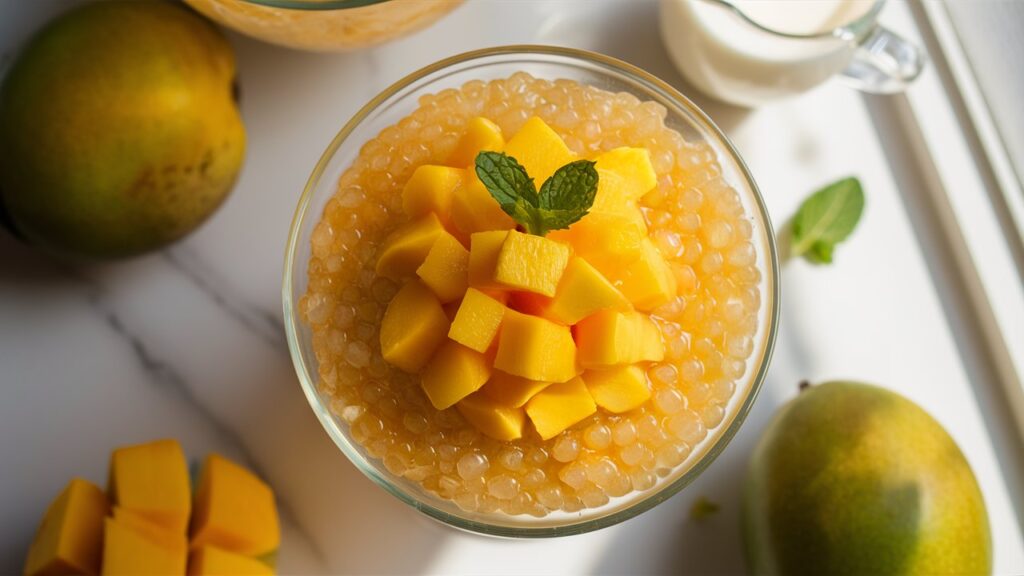
This mango sago recipe is as beautiful to look at as it is delicious to eat. Here’s how to make it look as good as it tastes:
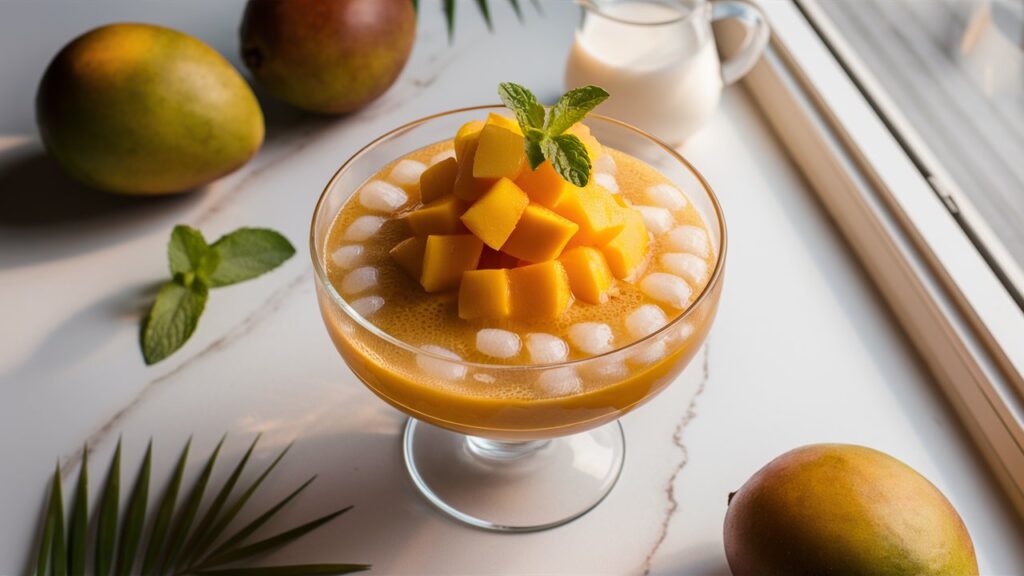
Serve in clear glasses or bowls. The golden mango color and translucent sago pearls are stunning when visible through a clear vessel. Tall glasses, clear dessert cups, or wide shallow bowls all work beautifully.
Layer strategically. Pour the mango coconut base first, then add a generous amount of mango cubes that float on top. The contrast of the smooth golden base and the jewel-like mango cubes makes this mango sago recipe look professionally made.
Garnish with intention. A sprig of fresh mint, a few pomelo segments, an extra cube of mango, or a light dusting of desiccated coconut on top elevates the presentation significantly.
Serve immediately after garnishing. Once the mango cubes are added to the top, serve the mango sago recipe right away for the best visual presentation. The cubes begin to sink into the liquid over time.
Make ahead: This mango sago recipe is an excellent make-ahead dessert. Prepare the base and cook the sago up to 24 hours in advance. Store separately in the refrigerator and combine just before serving for the best texture.
Storing leftovers: Store the finished mango sago recipe in an airtight container in the refrigerator for up to 2 days. The sago pearls continue to absorb liquid and become softer over time — add a splash of coconut milk when serving leftovers to restore the desired consistency.
Freezing: This mango sago recipe does not freeze well — the sago pearls become hard and grainy when frozen. Always make fresh or refrigerate for short-term storage only.
Can I use frozen mango in this mango sago recipe? Yes — thaw completely and drain any excess liquid before blending. Frozen mango produces a good result when fresh is not available, though fresh ripe mango always produces superior flavor.
Can I use tapioca pearls instead of sago pearls in this mango sago recipe? Absolutely. Small tapioca pearls are an excellent substitute and produce a very similar texture. Cook according to package directions as cooking times vary between brands.
How sweet should this mango sago recipe be? The sweetness depends entirely on the ripeness of your mangoes. Taste the blended mango base before adding any additional sugar. Ripe Alphonso or Ataulfo mangoes may need no added sweetener at all.
Can I make a dairy-free version of this mango sago recipe? Yes — simply omit the evaporated milk and use full-fat coconut milk only. The result is slightly less rich but still delicious and completely vegan.
Why are my sago pearls hard in the center? The pearls need more cooking time. Continue simmering and check every 2 minutes until they are almost completely translucent with just a tiny white dot in the center, then cover and rest off the heat for 10 minutes.
This mango sago recipe is proof that the most memorable desserts are often the simplest — a handful of quality ingredients combined with proper technique and a little patience. The combination of sweet tropical mango, creamy coconut, and chewy sago pearls creates a dessert that’s refreshing without being insubstantial, sweet without being cloying, and beautiful without being complicated.
Make this mango sago recipe for your next gathering and watch every bowl disappear. Serve it at a dinner party and watch your guests ask for the recipe before they’ve finished eating. Make it on a hot afternoon just for yourself and experience firsthand why this mango sago recipe has been beloved across Asia for generations.
It’s that good. And now it’s yours.