If there’s one bread that perfectly balances simplicity and wow-factor, it’s focaccia. And when you make it with a sourdough…
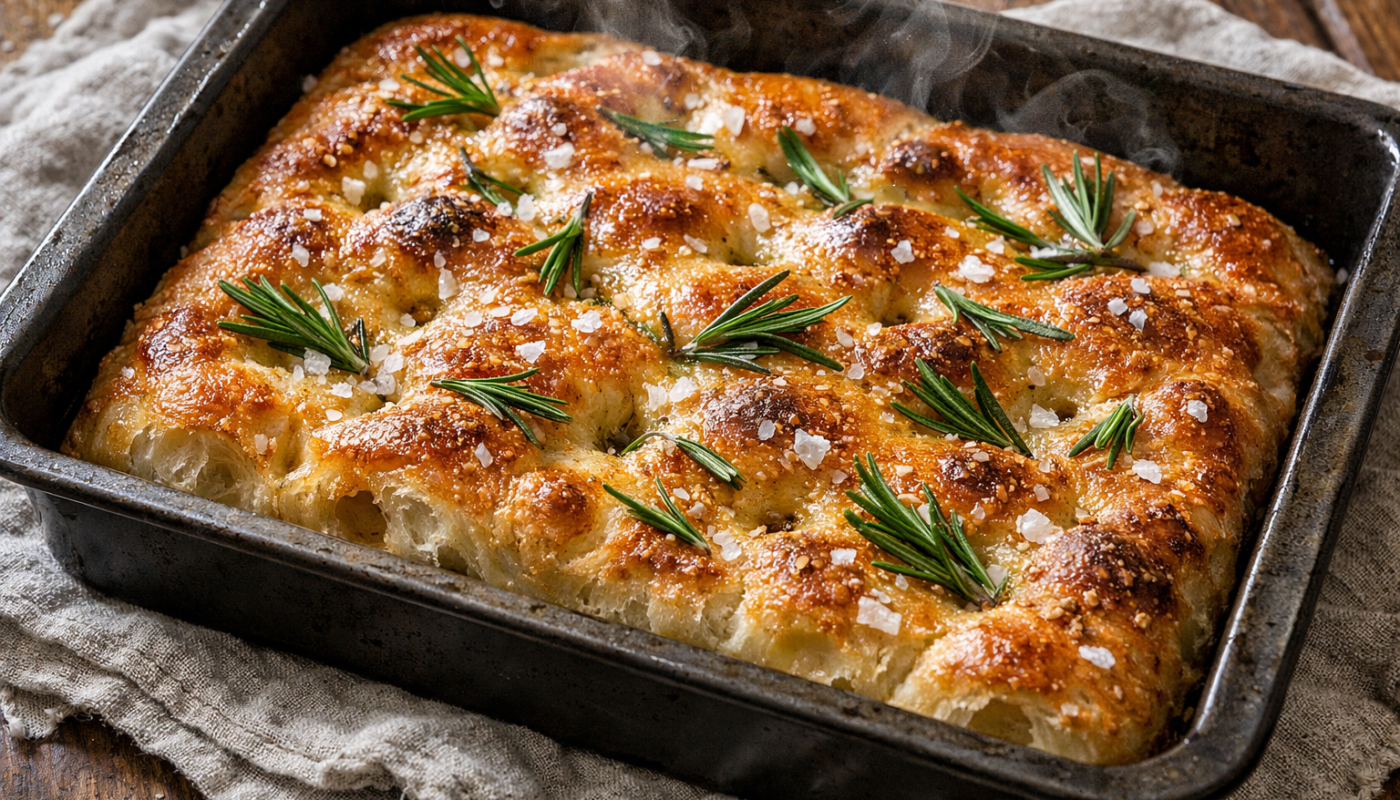
If there’s one bread that perfectly balances simplicity and wow-factor, it’s focaccia. And when you make it with a sourdough starter instead of commercial yeast, the flavor deepens into something truly extraordinary. This sourdough focaccia recipe gives you that iconic golden, olive-oil-crisped bottom, a pillowy airy interior, and that signature dimpled top — all with the tangy complexity that only real sourdough fermentation can deliver.
Whether you’re a seasoned sourdough baker or you’ve never worked with a starter before, this guide walks you through everything step by step.
Traditional focaccia uses commercial yeast for a quick rise. It’s good — but sourdough focaccia is on another level entirely.
Here’s why:
Flavor. Wild yeast fermentation produces lactic and acetic acids that give sourdough its signature tang. In focaccia, this translates to a depth of flavor that commercial yeast simply cannot replicate.
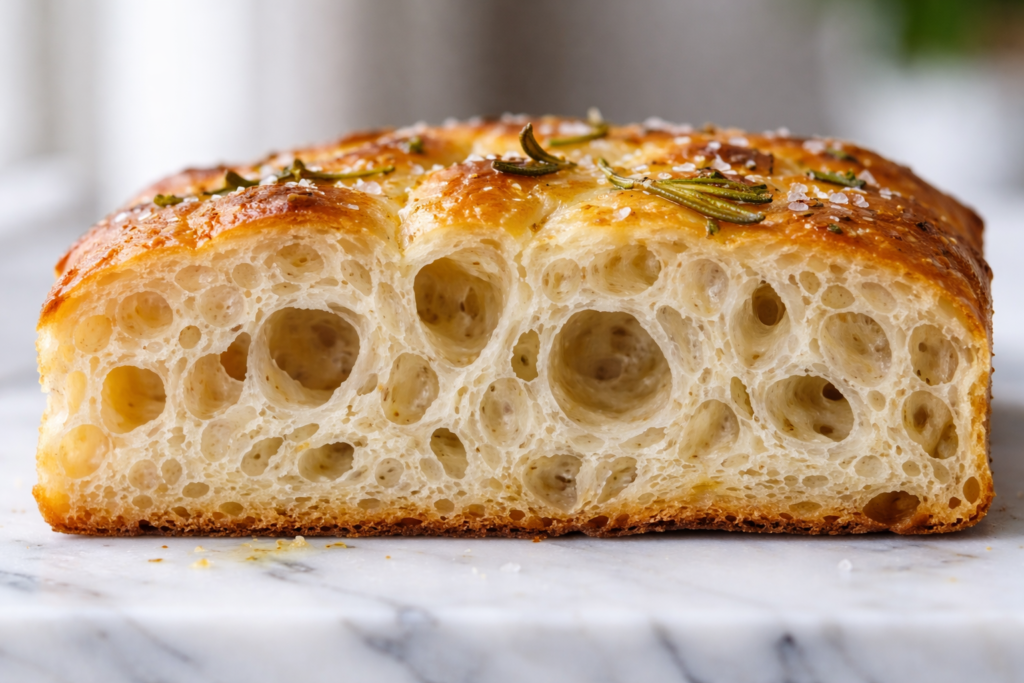
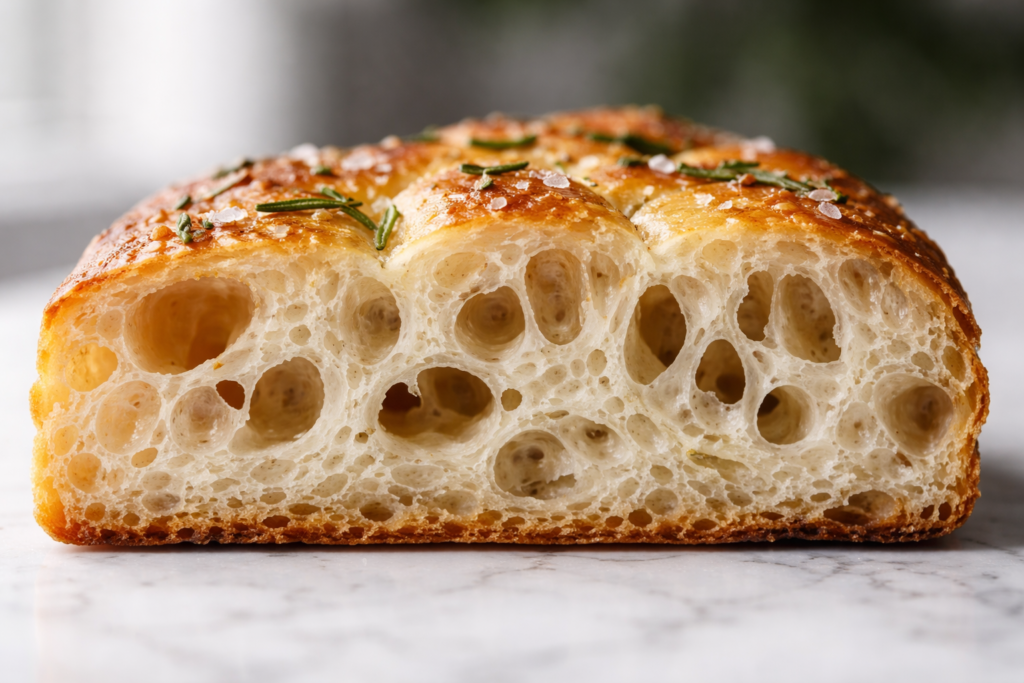
Texture. The long, slow cold fermentation that sourdough requires develops gluten more thoroughly, producing an incredibly open, airy crumb with large irregular bubbles — exactly what great focaccia should look like.
Digestibility. The extended fermentation process breaks down phytic acid and partially pre-digests the gluten, making sourdough bread easier on the stomach than commercially yeasted bread.
Shelf life. The natural acids in sourdough act as preservatives, keeping your focaccia fresher for longer compared to regular bread.
Satisfaction. There’s something deeply satisfying about making bread from a living culture you’ve nurtured yourself. Sourdough baking connects you to thousands of years of human food tradition.
Before starting this sourdough focaccia recipe, make sure you have:
The foundation of this recipe is an active, bubbly sourdough starter. Here’s what you need to know:
What is a sourdough starter? It’s a fermented mixture of flour and water that contains wild yeast and beneficial bacteria. When fed regularly, it becomes a powerful leavening agent.
Is your starter ready to use? Your starter is ready when it has doubled in size within 4–8 hours of feeding, smells pleasantly sour and yeasty, and passes the float test — drop a small spoonful into water, and if it floats, it’s active enough to leaven bread.
What if my starter is weak? Feed it twice daily for 2–3 days before baking. Consistency is key to building a strong, predictable starter.
Hydration level. This recipe works best with a 100% hydration starter, meaning equal weights of flour and water.
This recipe uses an overnight cold fermentation for maximum flavor. Plan to start the day before you want to bake.
Don’t skimp on the olive oil. Olive oil is not just a flavor component in focaccia — it’s structural. It coats the bottom and sides of the pan to create that signature crispy crust, and it’s poured over the top before baking to create the golden color and rich flavor. Use a good quality extra virgin olive oil.
Wet hands, not floured hands. Focaccia dough is very wet and sticky by design. Instead of adding flour (which will tighten the gluten and ruin the texture), wet your hands before handling the dough. This prevents sticking without changing the dough’s hydration.
Embrace the long fermentation. The overnight cold rest in the refrigerator is where most of the flavor develops. Don’t try to rush this step by shortening the time. The longer and slower the fermentation, the better the result.
Get the dimpling right. When you dimple the dough, press your fingers all the way down to the bottom of the pan. Don’t be timid — deep dimples are what hold the pools of olive oil that make focaccia so incredible.
Bake hot. Focaccia needs high heat to get that crispy bottom and golden top. Make sure your oven is fully preheated to the right temperature before the pan goes in.
Line or heavily oil the pan. A properly oiled pan is essential. If you’re worried about sticking, line the pan with parchment paper first, then add oil on top of the paper.
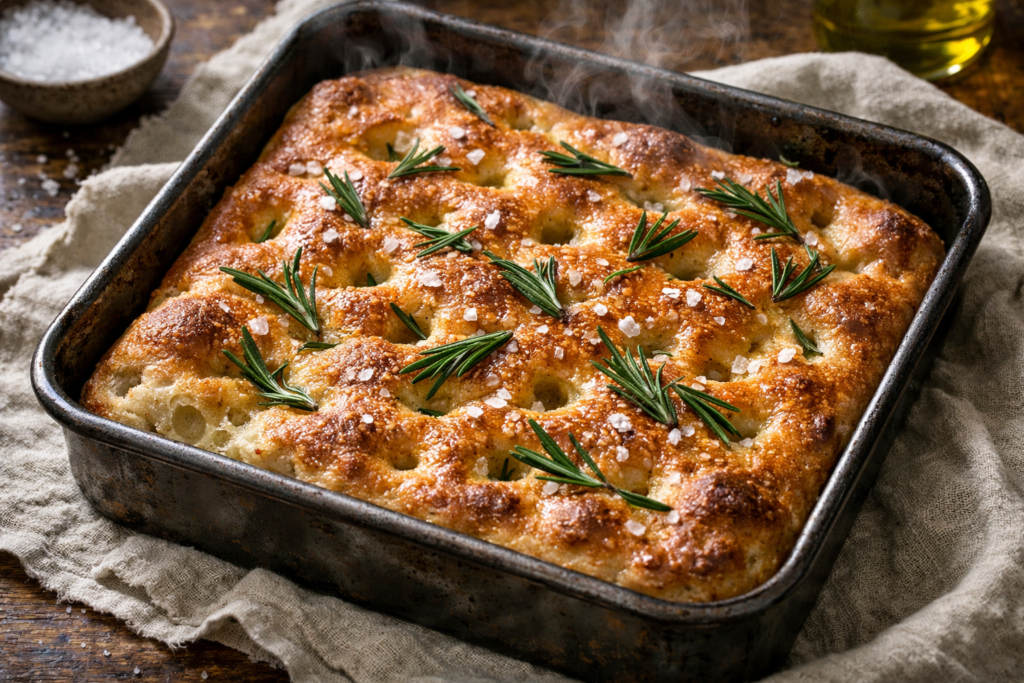
The classic topping is simply flaky sea salt and fresh rosemary — but the possibilities are genuinely endless:
Savory classics:
More adventurous options:
Sweet focaccia (yes, really):
Room temperature: Wrap in a clean kitchen towel or store in an airtight container. Best consumed within 2 days.
Refrigerator: Store wrapped for up to 5 days. Reheat in the oven or a dry skillet to restore the crispy crust.
Freezer: Slice and freeze individual pieces wrapped tightly in plastic wrap, then placed in a freezer bag. Keeps for up to 3 months. Reheat from frozen in a 180°C oven for 10–12 minutes.
Reheating tip: Never microwave focaccia — it will turn rubbery. Always use an oven or a hot dry skillet to bring back the crust.
Sourdough focaccia is extraordinarily versatile. Here are some of the best ways to enjoy it:
As a side bread: Serve alongside soups, stews, salads, and pasta dishes. It’s particularly wonderful with tomato-based soups and creamy burrata.
As a sandwich base: Slice horizontally and use as sandwich bread. The sturdy, flavorful crumb holds up beautifully to generous fillings.
As an appetizer: Tear into pieces and serve with olive oil for dipping, hummus, or a selection of dips and spreads.
On a cheese board: Focaccia makes a sophisticated addition to a charcuterie or cheese board, especially paired with aged cheeses and cured meats.
As pizza focaccia: Top with tomato sauce, mozzarella, and your favorite toppings before baking for a thick, pillowy pizza-focaccia hybrid.
My focaccia didn’t rise much. Your starter was likely not active enough. Feed it more frequently for a few days before your next bake, and make sure it has doubled and is visibly bubbly before using it.
The bottom is soggy, not crispy. You need more oil in the pan, a hotter oven, or longer baking time. Metal pans also conduct heat better than glass for a crispier base.
The crumb is dense with no large bubbles. This usually means the dough was overworked, the gluten was overdeveloped, or the fermentation was cut short. Handle the dough gently and give it more time.
My focaccia is too sour. Reduce the cold fermentation time slightly, or use your starter at peak activity rather than after it has begun to deflate.
The toppings burned. Add delicate toppings like fresh herbs in the last 5 minutes of baking, or after the focaccia comes out of the oven.
| Sourdough Focaccia | Regular Focaccia | |
|---|---|---|
| Leavening | Wild yeast starter | Commercial yeast |
| Fermentation time | 12–18 hours | 2–3 hours |
| Flavor | Complex, tangy | Mild, yeasty |
| Texture | Open, irregular crumb | More uniform crumb |
| Digestibility | Better | Standard |
| Shelf life | 4–5 days | 1–2 days |
This sourdough focaccia recipe is proof that the best breads don’t require complicated techniques or expensive equipment. What they do require is time, quality ingredients, and a little patience with the fermentation process.
The result — a golden, crispy-bottomed, pillowy-topped focaccia with a flavor that deepens with every bite — is worth every hour of waiting. Once you’ve made sourdough focaccia from scratch, the store-bought version will never feel the same again.
Make it once, and it will become a permanent part of your baking rotation.