If you’ve been searching for the perfect recipe for Ezekiel bread with sprouted grains that gives you a genuinely nutritious,…
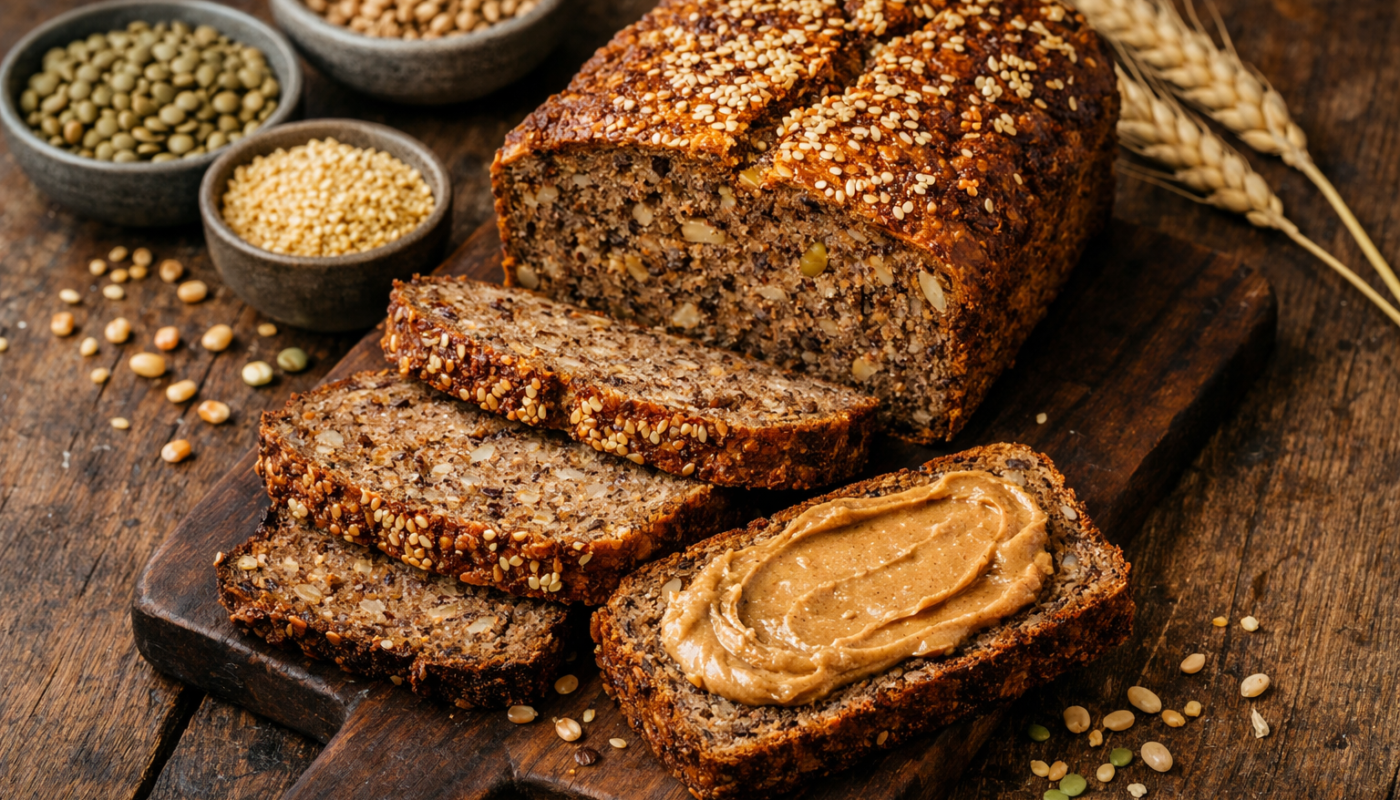
If you’ve been searching for the perfect recipe for Ezekiel bread with sprouted grains that gives you a genuinely nutritious, deeply flavorful, and authentically made loaf — you’ve found exactly what you need. This recipe for Ezekiel bread with sprouted grains is one of the most nutritionally complete bread recipes in existence — a dense, hearty, deeply satisfying loaf made from six sprouted whole grains and legumes that together form a complete protein source unlike any other bread you have ever made.
The recipe for Ezekiel bread with sprouted grains draws its name and inspiration directly from the Bible — specifically from Ezekiel 4:9, where God instructs the prophet Ezekiel to make bread from wheat, barley, beans, lentils, millet, and spelt. This ancient combination of sprouted grains and legumes — dismissed for centuries as merely symbolic — turns out to be one of the most nutritionally sophisticated bread formulas ever devised, providing all essential amino acids, abundant fiber, and a remarkable range of vitamins and minerals in every single slice of this recipe for Ezekiel bread with sprouted grains.
Whether you’re a health-conscious baker looking for the most nutritious bread possible, someone following a clean eating lifestyle, or simply a curious home baker who wants to connect with one of humanity’s oldest food traditions — this recipe for Ezekiel bread with sprouted grains gives you everything you need to produce a consistently extraordinary loaf every single time.
Six sprouted grains and legumes working together. The genius of this recipe for Ezekiel bread with sprouted grains lies in the specific combination of six ingredients that complement each other nutritionally in a way that no single grain or legume can achieve alone. Wheat, barley, spelt, millet, beans, and lentils — each sprouted before grinding — create a nutritional synergy in this recipe for Ezekiel bread with sprouted grains that produces a complete protein, abundant fiber, and maximum mineral bioavailability.
Sprouting transforms the nutrition. The sprouting process is the defining characteristic of this recipe for Ezekiel bread with sprouted grains — and the element that elevates it far above conventional whole grain bread. When grains and legumes are sprouted for this recipe for Ezekiel bread with sprouted grains, phytic acid is broken down, enzyme inhibitors are neutralized, starches are partially converted, and the bioavailability of every nutrient increases dramatically.
No refined flour. Unlike most bread recipes that rely on refined white flour for structure, this recipe for Ezekiel bread with sprouted grains uses only freshly ground sprouted grains and legumes — nothing refined, nothing processed, nothing stripped of its natural nutrition. Every ingredient in this recipe for Ezekiel bread with sprouted grains is a whole food in its most natural form.
No added sugar. This recipe for Ezekiel bread with sprouted grains contains no added sugar — the natural sweetness comes entirely from the sprouted grains themselves, whose starches have been partially converted to simpler sugars during the sprouting process. This makes this recipe for Ezekiel bread with sprouted grains one of the lowest glycemic breads you can make.
Complete protein in every slice. The combination of grains and legumes in this recipe for Ezekiel bread with sprouted grains provides all nine essential amino acids — making it one of the very few plant-based complete protein sources in bread form. Each slice of this recipe for Ezekiel bread with sprouted grains delivers 6 grams of high-quality protein.
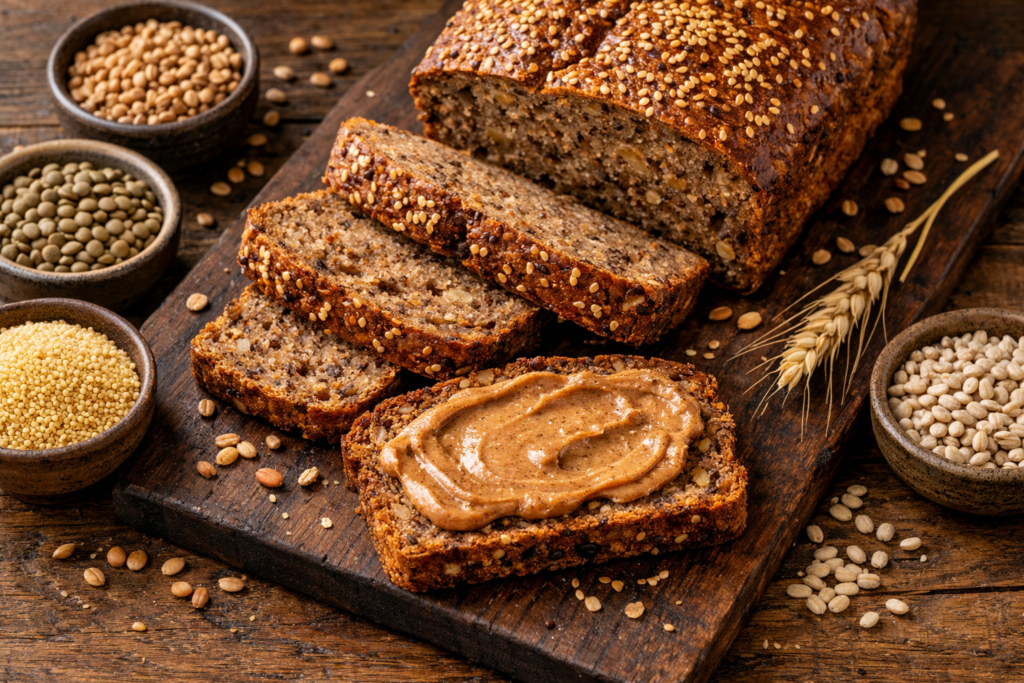
The recipe for Ezekiel bread with sprouted grains has a documented ancient origin that sets it apart from virtually every other bread recipe in existence. Ezekiel 4:9 in the Hebrew Bible states: “Take wheat and barley, beans and lentils, millet and spelt; put them in a storage jar and use them to make bread for yourself.”
Written approximately 2,600 years ago, this biblical instruction contains what modern nutritional science recognizes as one of the most sophisticated and nutritionally complete grain and legume combinations ever described. The recipe for Ezekiel bread with sprouted grains that derives from this passage was not understood as nutritionally significant for most of history — it was read as a symbolic or practical survival food instruction.
It was only when modern nutritionists began analyzing the specific combination of ingredients in this recipe for Ezekiel bread with sprouted grains that its true genius became apparent. The precise combination of grains and legumes specified creates a complete protein. The natural fermentation implied by the long storage creates additional nutritional benefits. And the sprouting of the grains — a natural process that occurs when grain is stored with moisture present — further enhances the nutritional profile of this recipe for Ezekiel bread with sprouted grains.
The commercial version of this recipe for Ezekiel bread with sprouted grains — produced by Food for Life Baking Company under the Ezekiel 4:9 brand — has introduced millions of people worldwide to sprouted grain bread. But this homemade recipe for Ezekiel bread with sprouted grains is fresher, more customizable, and more deeply satisfying than any commercial version available.
Each of the six ingredients in this recipe for Ezekiel bread with sprouted grains contributes specific nutritional benefits that make the whole greater than the sum of its parts:
Sprouted wheat berries: The primary grain and structural backbone of this recipe for Ezekiel bread with sprouted grains. Hard red winter wheat berries provide gluten structure, complex carbohydrates, B vitamins, and fiber. When sprouted for this recipe for Ezekiel bread with sprouted grains, phytic acid is dramatically reduced and mineral bioavailability increases significantly.
Sprouted barley: Adds a mild, slightly sweet, nutty flavor to this recipe for Ezekiel bread with sprouted grains. Sprouted barley is exceptionally rich in beta-glucan — a soluble fiber with well-documented cholesterol-lowering properties. The sprouting process in this recipe for Ezekiel bread with sprouted grains increases barley’s digestibility and enhances its beta-glucan activity.
Sprouted spelt: An ancient relative of wheat with a distinctive nutty, slightly sweet flavor that is one of the most recognizable notes in a well-made recipe for Ezekiel bread with sprouted grains. Sprouted spelt contains more protein than modern wheat and has a gluten structure that many people with wheat sensitivity find more digestible.
Sprouted millet: A small, golden, naturally gluten-free grain that adds subtle sweetness and contributes to the golden color of this recipe for Ezekiel bread with sprouted grains. Sprouted millet is one of the most easily digestible components of this recipe for Ezekiel bread with sprouted grains and is rich in magnesium and phosphorus.
Sprouted great northern beans: The primary legume in this recipe for Ezekiel bread with sprouted grains. Sprouted beans provide the lysine that the grain components lack — completing the amino acid profile of this recipe for Ezekiel bread with sprouted grains. They also add a creamy, slightly earthy flavor and contribute to the dense, moist texture.
Sprouted lentils: The second legume and one of the most nutritionally dense ingredients in this recipe for Ezekiel bread with sprouted grains. Sprouted lentils are among the best plant sources of iron, folate, and plant protein. Green or brown lentils sprout most reliably and work best in this recipe for Ezekiel bread with sprouted grains.
Sprouting the grains and legumes is the most distinctive and important step in this recipe for Ezekiel bread with sprouted grains. While it takes 2–3 days of total time, the actual hands-on work is minimal:
Day 1 — Soaking (evening): Rinse all six grains and legumes for this recipe for Ezekiel bread with sprouted grains thoroughly under cold water. Place each in a separate bowl or jar (they sprout at different rates) and cover with plenty of cool water — the grains will swell significantly. Soak for 8–12 hours at room temperature. This initial soaking activates the germination process and begins breaking down phytic acid in this recipe for Ezekiel bread with sprouted grains.
Day 2 — First rinse (morning): Drain and rinse all soaked grains and legumes for this recipe for Ezekiel bread with sprouted grains thoroughly under cold running water. Place each in a fine-mesh strainer or sprouting jar tilted at an angle to allow excess water to drain while keeping the grains moist. Rinse twice daily — morning and evening — to keep them moist but not waterlogged.
Day 2–3 — Sprouting: Within 24–48 hours of draining, tiny white sprout tails will begin to emerge from each grain and legume in this recipe for Ezekiel bread with sprouted grains. The ideal sprouting stage for this recipe for Ezekiel bread with sprouted grains is when the sprout tail is just visible — approximately 2–3mm long. At this stage the phytic acid has been substantially reduced but the starches haven’t been over-converted.
Visual cues for perfect sprouting: Each grain and legume in this recipe for Ezekiel bread with sprouted grains should show a small, cream-colored sprout tip. The grains should smell fresh, slightly sweet, and slightly earthy — never sour, musty, or fermented. If any develop an off-smell, discard that batch and start again with fresh grain.
Sprouting temperature: The ideal temperature for sprouting the grains in this recipe for Ezekiel bread with sprouted grains is 18–22°C. Too warm and the grains may ferment rather than sprout. Too cold and sprouting will be very slow. Room temperature in most homes is perfect for this recipe for Ezekiel bread with sprouted grains.
After sprouting, the grains and legumes must be ground into a workable dough for this recipe for Ezekiel bread with sprouted grains:
Food processor method: The most accessible option for this recipe for Ezekiel bread with sprouted grains. Process the sprouted grains and legumes in batches until they form a coarse, wet paste. The texture should be slightly grainy — not a smooth puree. This coarse texture is what gives this recipe for Ezekiel bread with sprouted grains its characteristic dense, rustic crumb.
High-powered blender: A Vitamix or similar high-powered blender produces a slightly smoother paste for this recipe for Ezekiel bread with sprouted grains than a food processor. Process in batches with minimal added water for the best result.
Grain mill: If you have a home grain mill, you can grind the dried (not wet) sprouted grains for this recipe for Ezekiel bread with sprouted grains into a fine flour — then add water to form the dough. This method produces the most authentic texture closest to commercial recipe for Ezekiel bread with sprouted grains products.
The right consistency: The ground sprouted grain mixture for this recipe for Ezekiel bread with sprouted grains should look and feel like a very thick, slightly sticky paste — similar to very wet whole wheat bread dough. If it’s too dry, add water one tablespoon at a time. If it’s too wet, add a small amount of additional sprouted grain.
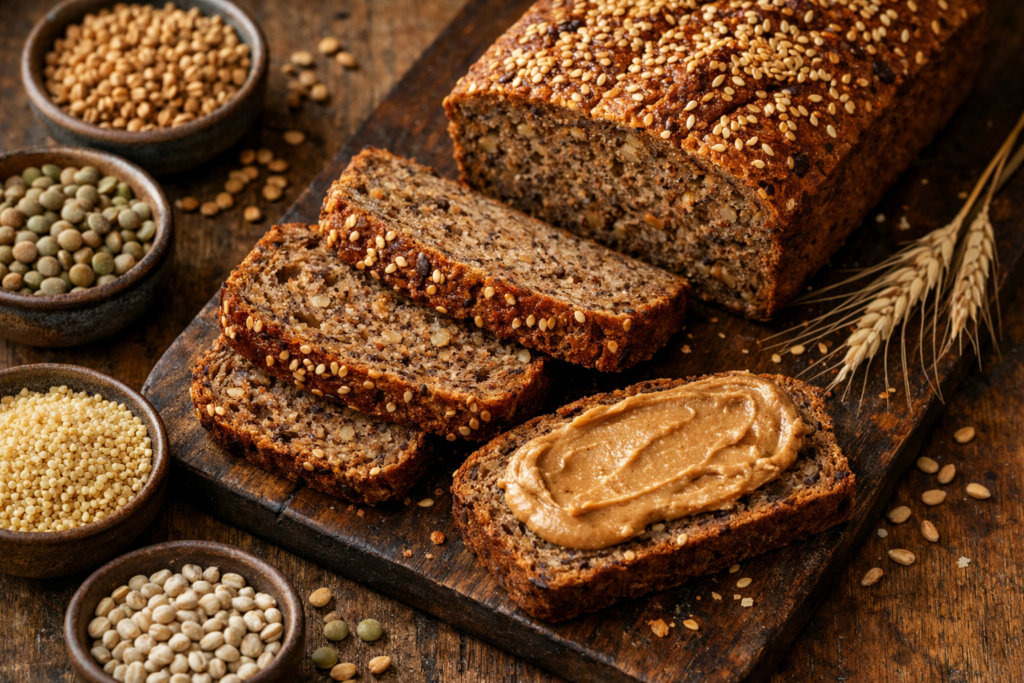
The health benefits of this recipe for Ezekiel bread with sprouted grains are extensive, well-documented, and genuinely extraordinary:
Complete protein. The specific combination of sprouted grains and legumes in this recipe for Ezekiel bread with sprouted grains provides all nine essential amino acids in proportions comparable to animal protein sources — making this one of the most protein-complete plant foods available.
Dramatically increased mineral absorption. The sprouting process in this recipe for Ezekiel bread with sprouted grains reduces phytic acid by up to 50%, dramatically increasing the bioavailability of zinc, iron, magnesium, and calcium. Minerals that are present in whole grains but often poorly absorbed are fully available in this recipe for Ezekiel bread with sprouted grains.
Lower glycemic impact. The sprouting process partially converts complex starches into simpler sugars in this recipe for Ezekiel bread with sprouted grains — paradoxically reducing the glycemic index rather than increasing it. Combined with the high fiber content, this recipe for Ezekiel bread with sprouted grains produces a slower, more sustained blood sugar response than any refined flour bread.
Superior digestibility. The enzyme inhibitors neutralized during sprouting in this recipe for Ezekiel bread with sprouted grains are precisely the compounds that make whole grains difficult to digest for many people. By removing them, this recipe for Ezekiel bread with sprouted grains produces a bread that is noticeably easier to digest than conventional whole grain bread.
Rich in B vitamins. The sprouting process significantly increases the B vitamin content of the grains in this recipe for Ezekiel bread with sprouted grains — particularly folate, thiamine, riboflavin, and niacin — that support energy metabolism, nervous system function, and cardiovascular health.
High in antioxidants. Sprouting dramatically increases the antioxidant content of grains and legumes in this recipe for Ezekiel bread with sprouted grains — particularly vitamin C (which appears during sprouting in grains that normally contain none) and phenolic compounds that protect against oxidative stress.
Toasted with avocado: The most popular way to serve this recipe for Ezekiel bread with sprouted grains — toast until crispy, top with mashed avocado, sea salt, red pepper flakes, and a drizzle of olive oil. The nuttiness of the sprouted grain bread paired with creamy avocado is extraordinary.
With almond butter and banana: A classic combination with this recipe for Ezekiel bread with sprouted grains — the nutty, slightly sweet bread pairs magnificently with almond butter and sliced banana for a protein-rich, energizing breakfast.
As sandwich bread: This recipe for Ezekiel bread with sprouted grains makes an exceptional sandwich base — sturdy enough to hold generous fillings without falling apart, flavorful enough to contribute to rather than just carry the sandwich flavors.
French toast: Thick slices of this recipe for Ezekiel bread with sprouted grains make remarkable French toast — the dense, moist crumb absorbs the egg custard beautifully and the nutty grain flavors pair magnificently with maple syrup.
With hummus: A slice of toasted recipe for Ezekiel bread with sprouted grains with hummus, cucumber, and fresh herbs is a nutritionally complete snack that’s both delicious and deeply satisfying.
Room temperature: Store this recipe for Ezekiel bread with sprouted grains wrapped in a clean kitchen towel or beeswax wrap at room temperature for up to 3 days. The absence of preservatives means this recipe for Ezekiel bread with sprouted grains stales faster than commercial bread — toast to refresh.
Refrigerator: This recipe for Ezekiel bread with sprouted grains keeps in the refrigerator for up to 1 week. The cold temperature slows mold growth significantly — always toast refrigerated slices of this recipe for Ezekiel bread with sprouted grains before eating for the best texture.
Freezer: This recipe for Ezekiel bread with sprouted grains freezes exceptionally well for up to 3 months. Slice the entire loaf before freezing and store in a freezer bag. Individual slices of this recipe for Ezekiel bread with sprouted grains can be toasted directly from frozen — no thawing required — making frozen slices just as convenient as fresh.
How long does the sprouting take for this recipe for Ezekiel bread with sprouted grains? Sprouting typically takes 2–3 days for this recipe for Ezekiel bread with sprouted grains at room temperature. The exact time depends on temperature and the specific grain or legume — wheat and spelt sprout fastest, beans and lentils slightly slower.
Can I use pre-sprouted flour for this recipe for Ezekiel bread with sprouted grains? Yes — sprouted grain flour is increasingly available in health food stores. Using pre-sprouted flour significantly reduces the preparation time for this recipe for Ezekiel bread with sprouted grains while preserving most of the nutritional benefits of sprouting.
Is this recipe for Ezekiel bread with sprouted grains gluten-free? No — this recipe for Ezekiel bread with sprouted grains contains wheat, barley, and spelt which all contain gluten. It is not suitable for people with celiac disease or severe gluten intolerance.
Why is my recipe for Ezekiel bread with sprouted grains so dense? Density is completely normal and expected in this recipe for Ezekiel bread with sprouted grains. The absence of refined flour and the use of whole sprouted grains produces a much denser loaf than conventional bread. This recipe for Ezekiel bread with sprouted grains is meant to be dense — it’s a feature, not a flaw.
Can I make this recipe for Ezekiel bread with sprouted grains without yeast? Yes — substitute commercial yeast with an active sourdough starter. Use 150g of active starter in place of the yeast for this recipe for Ezekiel bread with sprouted grains and allow a longer rise time of 4–6 hours.
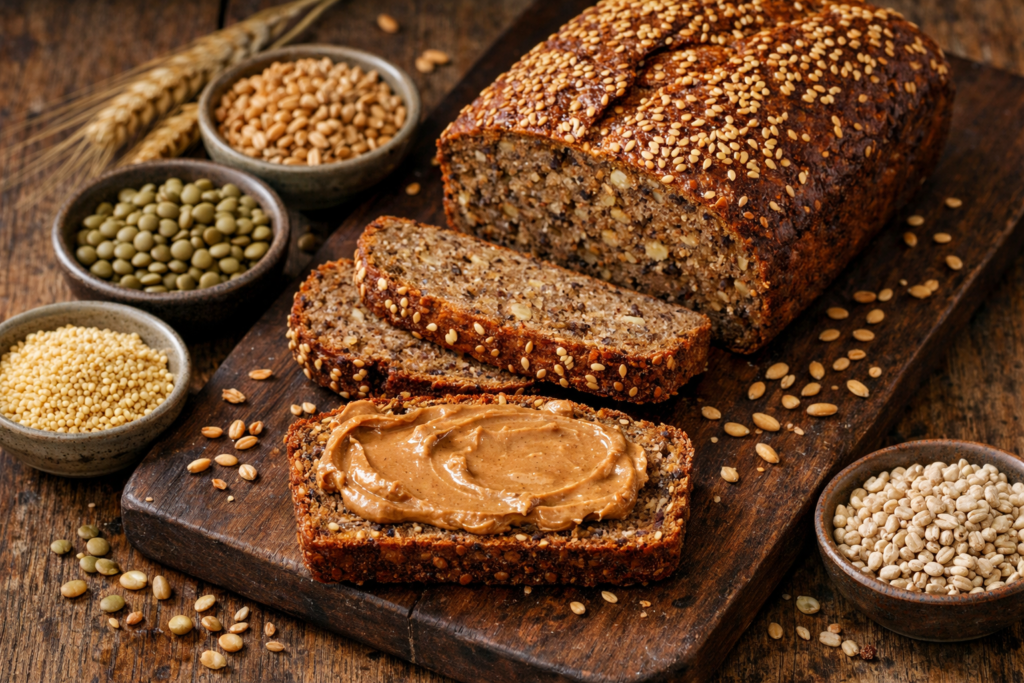
This recipe for Ezekiel bread with sprouted grains is proof that ancient wisdom and modern nutritional science are in perfect agreement. A 2,600-year-old biblical formula — six specific sprouted grains and legumes combined into a single loaf — produces one of the most nutritionally extraordinary breads it is possible to make at home.
Make this recipe for Ezekiel bread with sprouted grains once and experience everything that makes it so profoundly different from conventional bread — the deeper, nuttier flavor, the dense and satisfying crumb, the knowledge that every single slice of this recipe for Ezekiel bread with sprouted grains is delivering complete protein, maximum mineral absorption, and genuine whole food nutrition to your body.
This recipe for Ezekiel bread with sprouted grains is more than bread. It’s a connection to one of humanity’s oldest and most nutritionally intelligent food traditions — and one of the most genuinely nourishing things you can make in your kitchen.